

Hi hunters,
I consider myself lucky.
Lucky to travel to Omaha for the second time, accompanied by friends/stock nerds. Some of them also run stock investing newsletters like Kris from Potential Multibaggers and Pieter from Compounding Quality .
It was my second time in Omaha, and even though Buffett no longer runs Berkshire Hathaway, and the overall turnout was lower than last year, the ecosystem around it is still thriving.
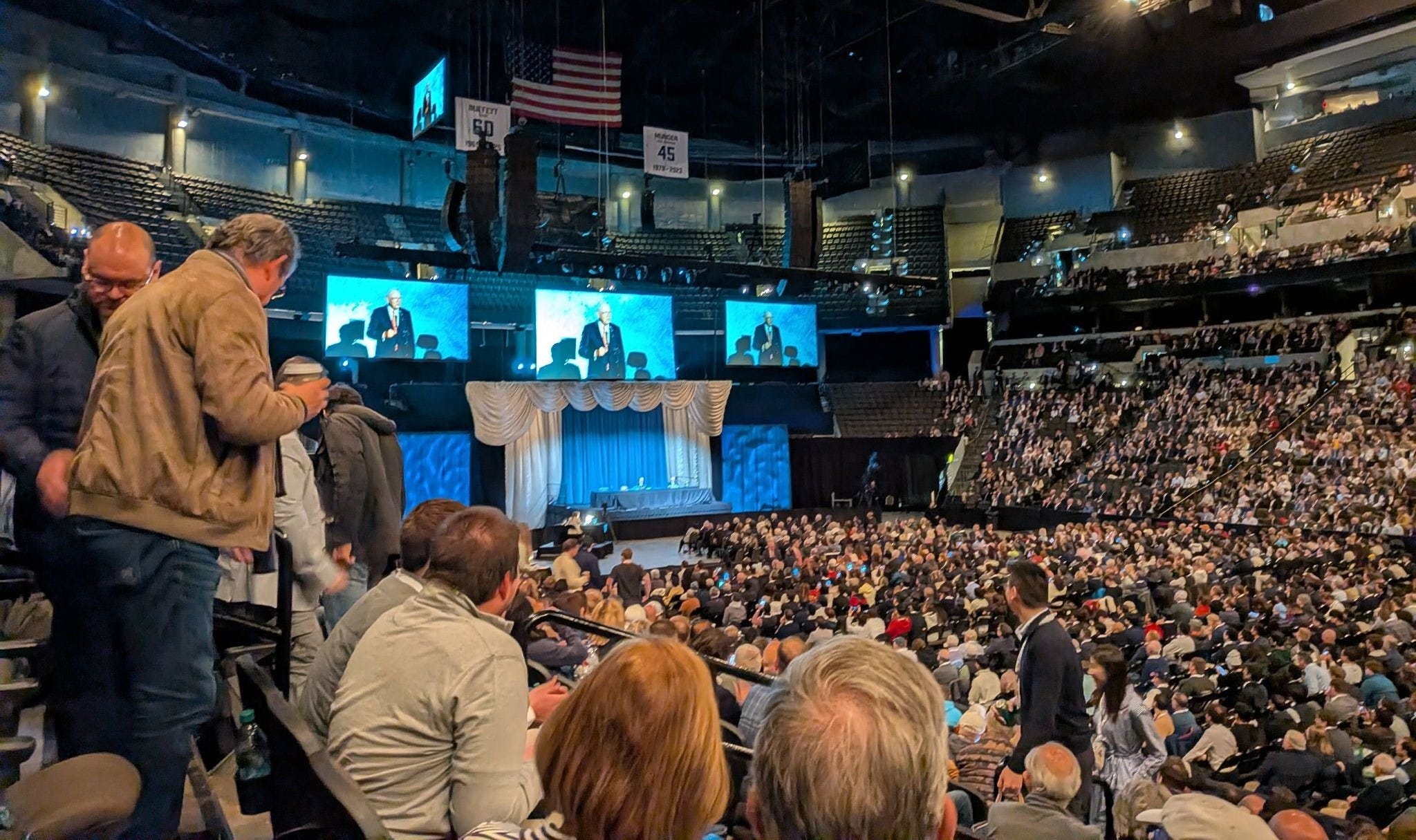
Lots of events. Stock pitches by some of the best investors I know. AI workshops by startup founders from Silicon Valley. And of course, hanging out in the evening with friends.
And the serendipity is strong.
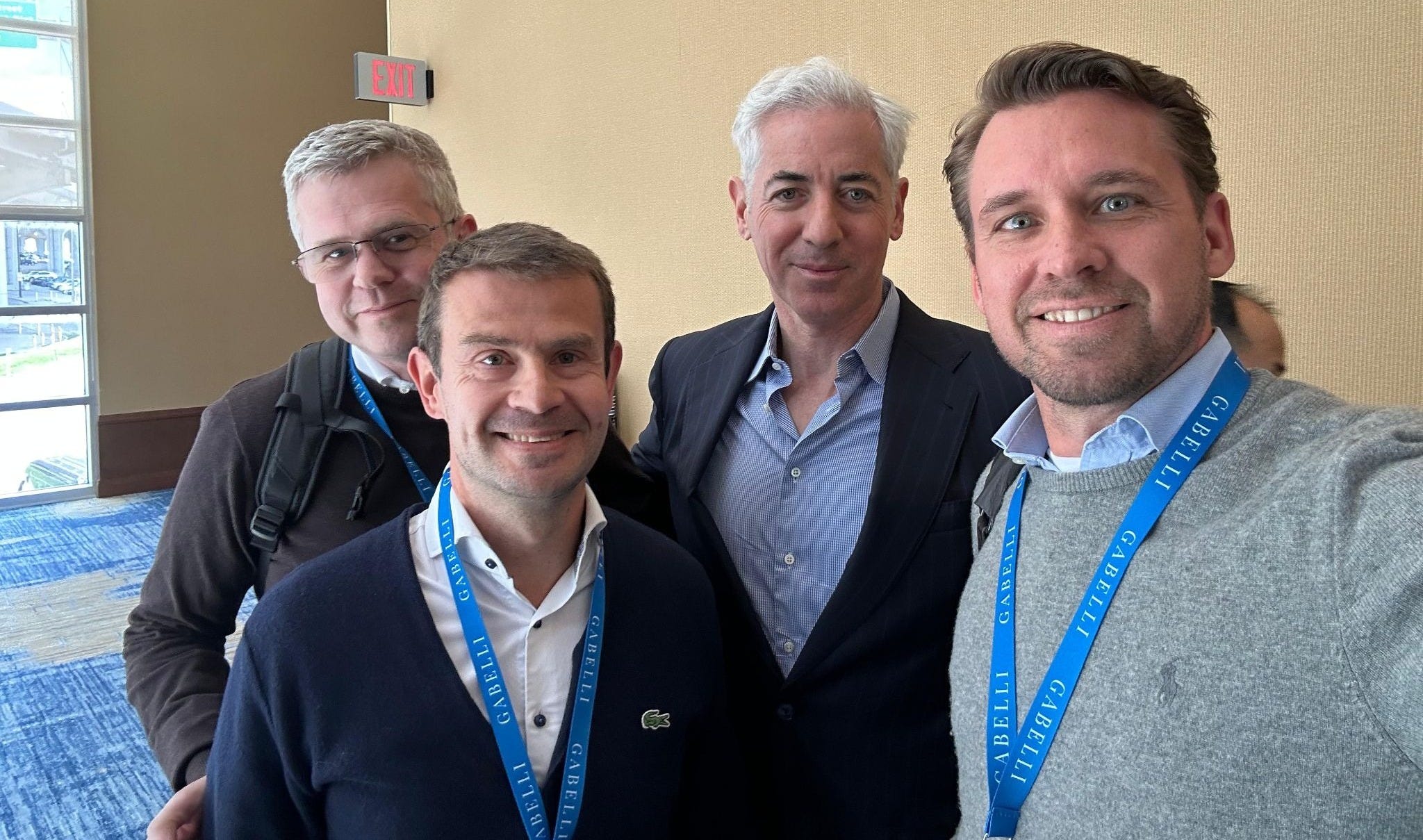
During the day, you randomly bump into some juggernauts in the industry, like Bill Ackman:
My goal is always the same for these kinds of events:
Surround myself with super smart people
Try to learn as much as I can, be a sponge
Apply those lessons to my stock analysis (and life)
The most important lesson I learned from nuclear engineering, when applied to stock investing, is to always stay humble. Always keep learning.
If you know me, you know my favorite slogan:
I never lose. Either I win or learn.
- Nelson Mandela
Let’s get into some of the highlights of the past week
(you can find the best stock pitches in a separate article in the coming days).
Lesson 1: It’s about the people
Imagine you’re like my son. You collect Pokémon cards.
One of his favorite pastimes?
To go to a Pokémon con to talk and interact with like-minded people.
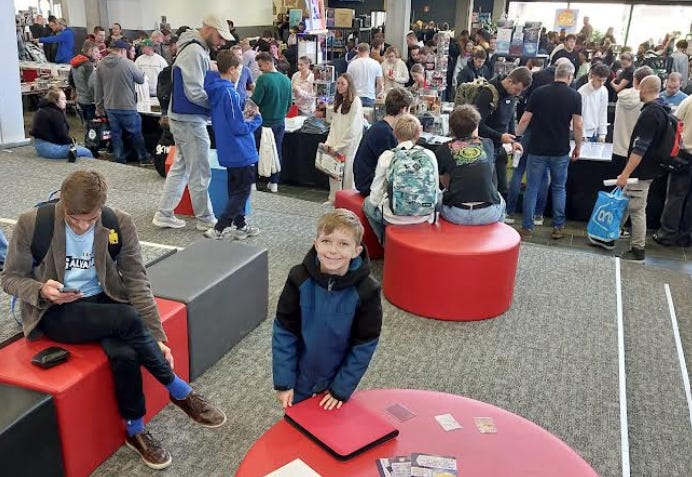
Buffett and Charlie have created something similar.
And it’s not just about investing in stocks.
It’s about values. About integrity and respect.
40,000 people don’t show up to hear what the holding company Berkshire Hathaway is all about.
They want to seek out the present-day philosophers. They want to feel connected to like-minded people.
And that’s why I believe the introduction video they chose at the beginning of the AGM was so fitting. To emphasize that even though Buffett is no longer at the helm, those values and virtues will be kept alive.
I’ve watched this video multiple times but those last 10 seconds still give me goosebumps:
Lesson 2: Maybe there is an AI bubble forming
As you know, I’m knee-deep in learning how to use Claude for stock analysis. I created a whole new newsletter dedicated to it.
A workshop was organized by 5 university graduates from Munich, who declined high-paying consultancy roles and moved to Palo Alto in San Francisco. There, they got sponsorship from Andreessen Horowitz. So now, they spend 16 hours a day getting up to speed on AI and figuring out which startups to launch.
When I asked them what the current bottleneck is to launch a great startup within the AI space, the answer was:
Raising capital is not a problem (VC’s back the team)
The bottleneck is finding great problems to solve
AI allows us to easily build software. In a world where everyone can code, the most important question is:
What should one build?
The fact that they have no problem raising a couple of million USD to launch a startup, even without a clear idea, smells like bubble territory.
This workshop was incredibly inspirational. I will write more on this topic in a future article over on “the other newsletter”.
Lesson 3: Even AI disruption will take time
I attended a fireside chat with none other than Bill Ackman as the main speaker. Pershing Square recently did an IPO. They now have 3 vehicles you can invest in. (PSUS on the New York stock exchange, PSH on the London Exchange and PS on the NYSE)
The fireside chat was organized by UBS, and quickly became a Q&A between the audience and Bill, who was accompanied by his Chief Investment Officer, Ryan Israel.
I must admit, I did not expect it, but the quality of the answers they gave blew me away.
Pershing invests in quality companies that they can grab at a great price following some kind of problem. Some examples from the past:
They bought Chipotle after the food contamination crisis in 2016
They bought Alphabet in 2023 when it dipped due to AI fears
They bought Restaurant brands in 2020 when COVID struck
And for just a moment, I thought: Maybe I should buy Pershing Square 😉
But I think I’m sticking with our microcaps.
What I learned the most was their holistic approach to investing. When asked about AI and how fast it would disrupt all industries, Ryan mentioned a historical study by Carlota Perez, who wrote: Technological Revolutions and Financial Capital. (I ordered it on Amazon)
Carlota’s delve into history shows that, over and over again, total disruption will take 20 to 30 years to achieve full market penetration.
Especially physical AI, (confirmed by the AI workshop I attended) will take a lot more time to develop.
Physical AI: AI systems that operate in, interact with, and understand the physical world, moving beyond software-only tools to control hardware via sensors and actuators
The main reason: It’s a lot harder to gather quality training data, and create the feedback loop of continuous improvement within physical AI. Basically, you need to put a robot to work, measure everything and feed it back into the system (like Tesla FSD)
Lesson 4: The time to live is now
Vitaliy Katsenelson, from the intellectual investor, invites everyone for breakfast each year.
More than 1,000 registered.
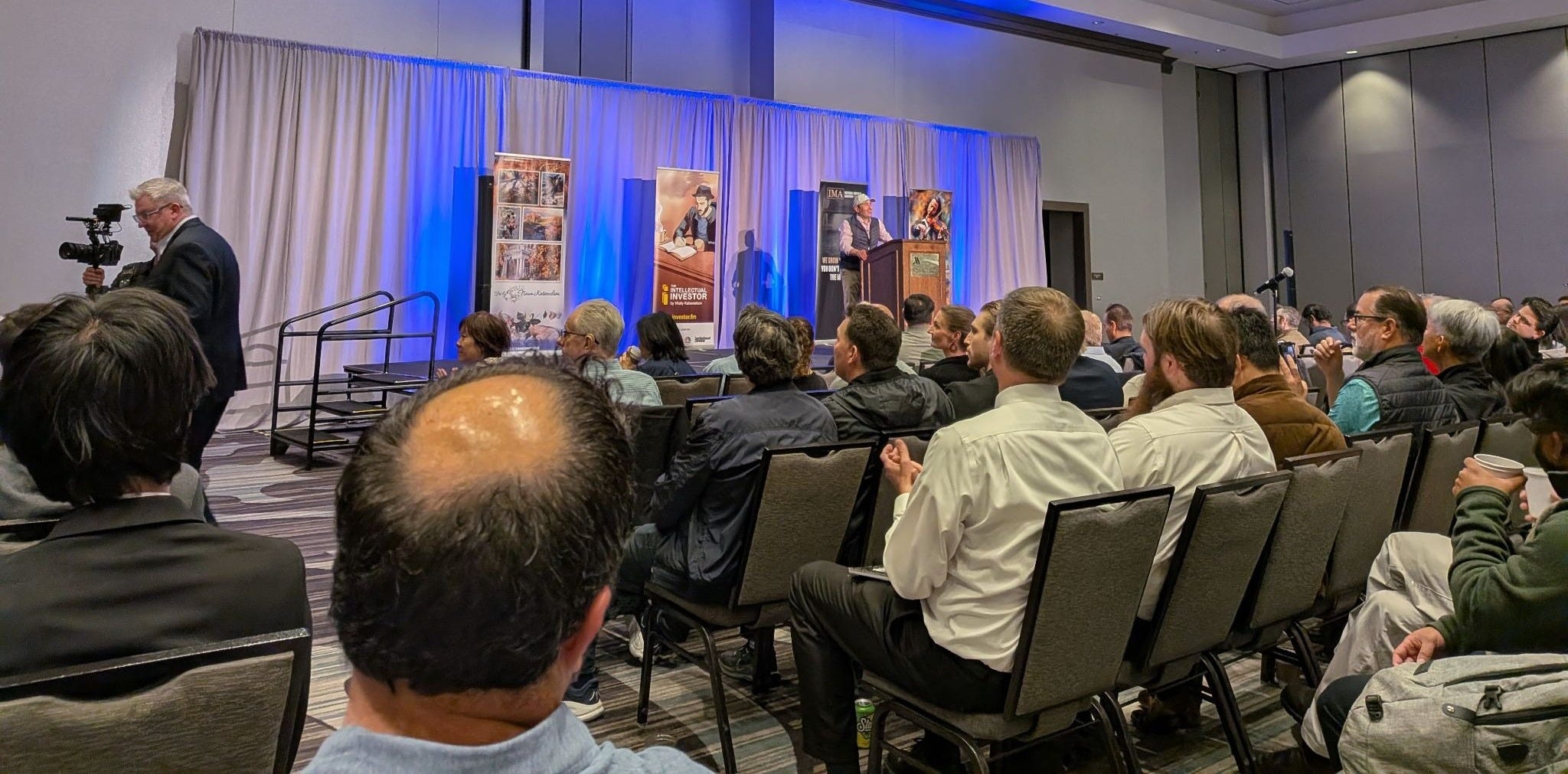
He takes about 2 and a half hours to do a Q&A where people can ask questions about investing, life, and everything in between.
His responses are thoughtful, and more importantly, when he doesn’t know, he says so.
Some of the highlights I picked up: (and I’m using the Feynman technique here to simplify, I hope I’m not butchering Vitaliy’s responses…)
When asked about how to achieve financial independence, remember that life happens now. Not after you’ve hit your number
How to raise your children when you have money, so that, as a man said, “They don’t become pricks”. Use mindful scarcity. Scarcity leads to struggle and innovation. It helps people grow.
On when to sell: The better the company, the more optionality it has, the less you should be inclined to sell. It’s difficult to create proper DCFs for these kinds of companies because of that optionality.
What he likes about Watches of Switzerland (Ticker WOSG). WOSG looks like a retailer, but it’s not. It’s a second derivative bet on Rolex. Rolex determines whether you can add an additional store. Rolex’s job is to maintain the scarcity of its product. Half of the sales are from the UK, the other half from the US. But based on population, if the US matched the UK’s sales, revenue would increase 6-fold.
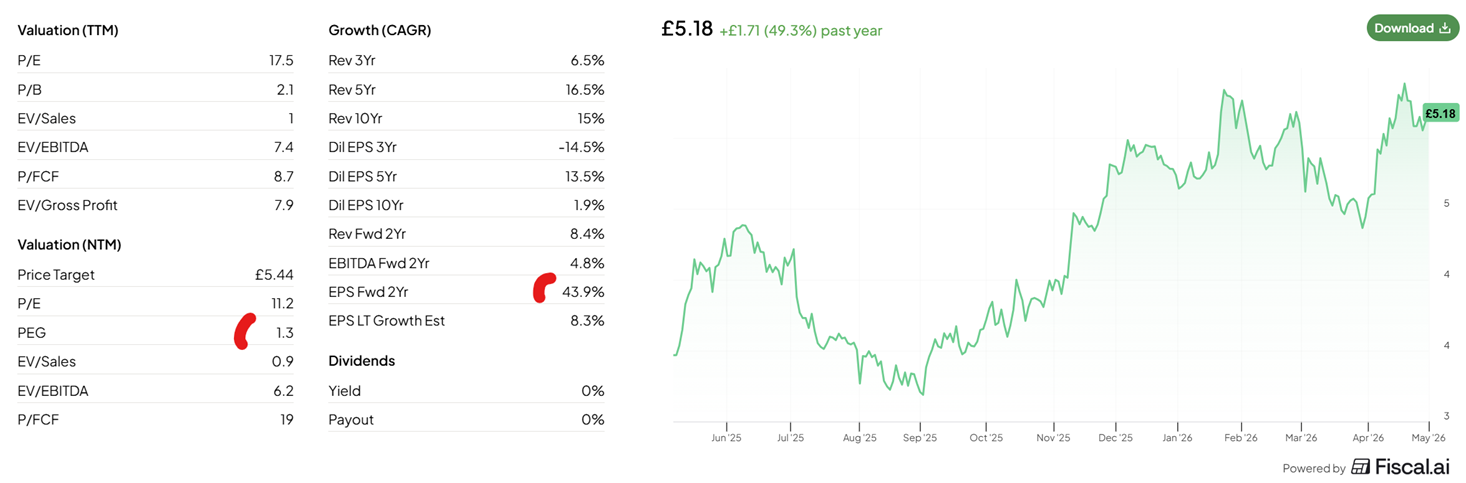
For a quick research report, just use the research function within fiscal.ai

Oh, and, if you’re interested in fiscal.ai, they offer an exclusive discount of 25% at the moment.
Lesson 5: The time to live is now
Important lessons merit repetition.
And I repeat this one because I often forget it myself.
When you’re passionate about stocks and building new things, you sometimes lose yourself in the frenzy of work.
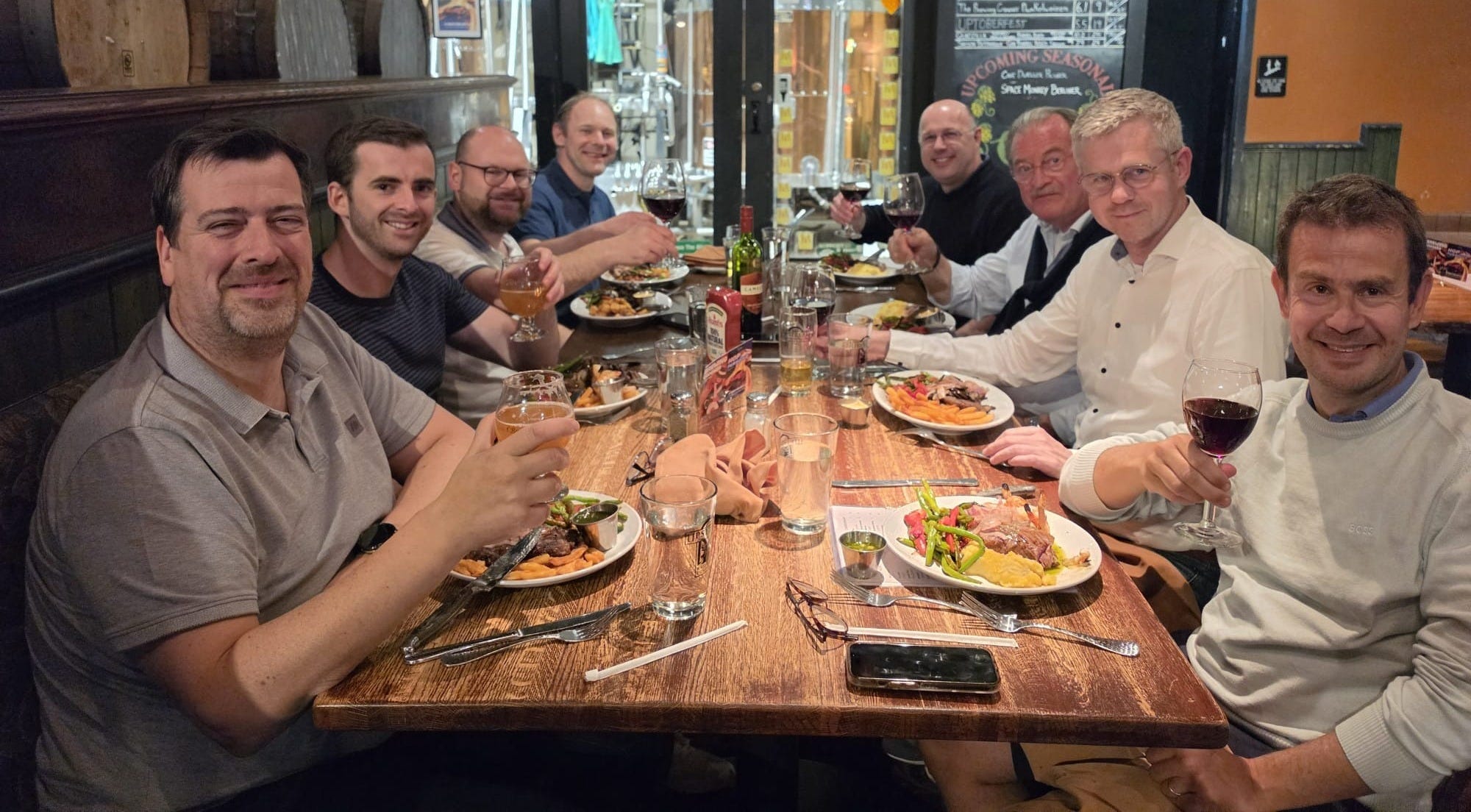
We did our best to enjoy our stay in Omaha and live in the moment.
This closing picture is a testament to that:
So now that this article comes to its end, do one thing for me.
Close your computer, or put down your smartphone.
Hug your children and family. Go grab a bite to eat with a friend.
Enjoy the moment.
We’ll talk about stocks again in the coming days.
May the markets be with you, always!
Kevin
Atomical Capital
Really enjoyed this piece. The lesson on combining humility with long term thinking stood out to me. Omaha always seems to reinforce that investing success is not just about numbers, but also mindset, discipline, and surrounding yourself with thoughtful people.