

Hi hunters,
Let’s go through the markets and look at an interesting software company.
1. Bubble Meter

Over the past couple of months, I’ve been saying, “The market looks hot.”
And what happens?
The market just keeps ripping. 😉
You can see it in the table above. Let’s dive a little deeper…
The Shiller P/E ratio
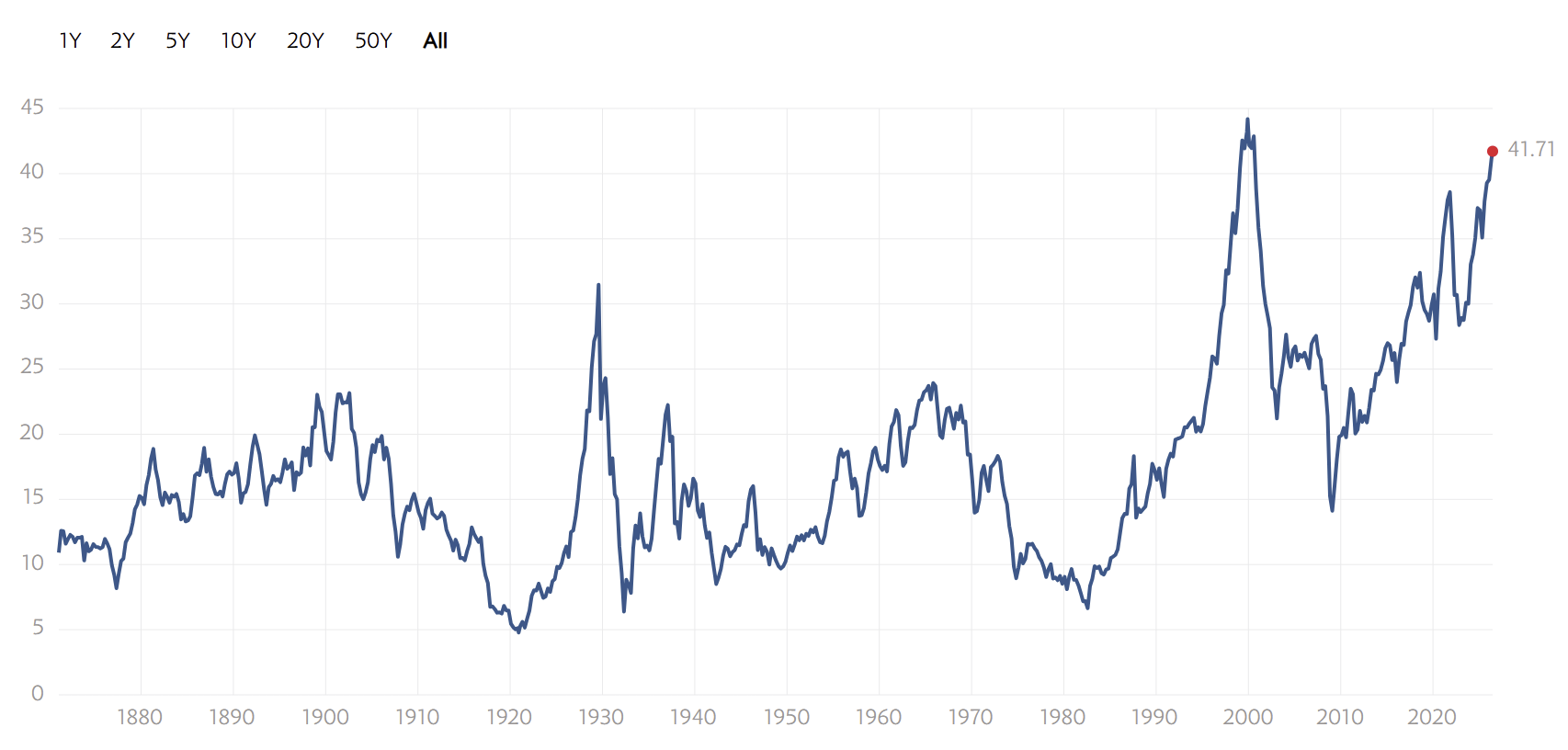
Note: A gentleman asked me last week, when I was lecturing at a conference on “How to use Claude as a junior analyst”, to let Claude draw this chart. It succeeded, but there were some errors.
So yeah, we’re nearing the peak of the dot-com bubble. (The Shiller P/E divides the S&P 500 index by the average-inflation adjusted earnings over the past 10 years.)
But then the natural first question becomes: What do earnings look like?
EPS of the S&P500 right before the dot-com crash: 52
EPS of the S&P500 today: 234
That means that, when looking at the overall S&P 500, we’re not in a 2000 bubble at this time.
Then the question becomes: how is the EPS distributed across the 500 largest companies in the US?
36% of that net income comes from the TOP 10 companies:
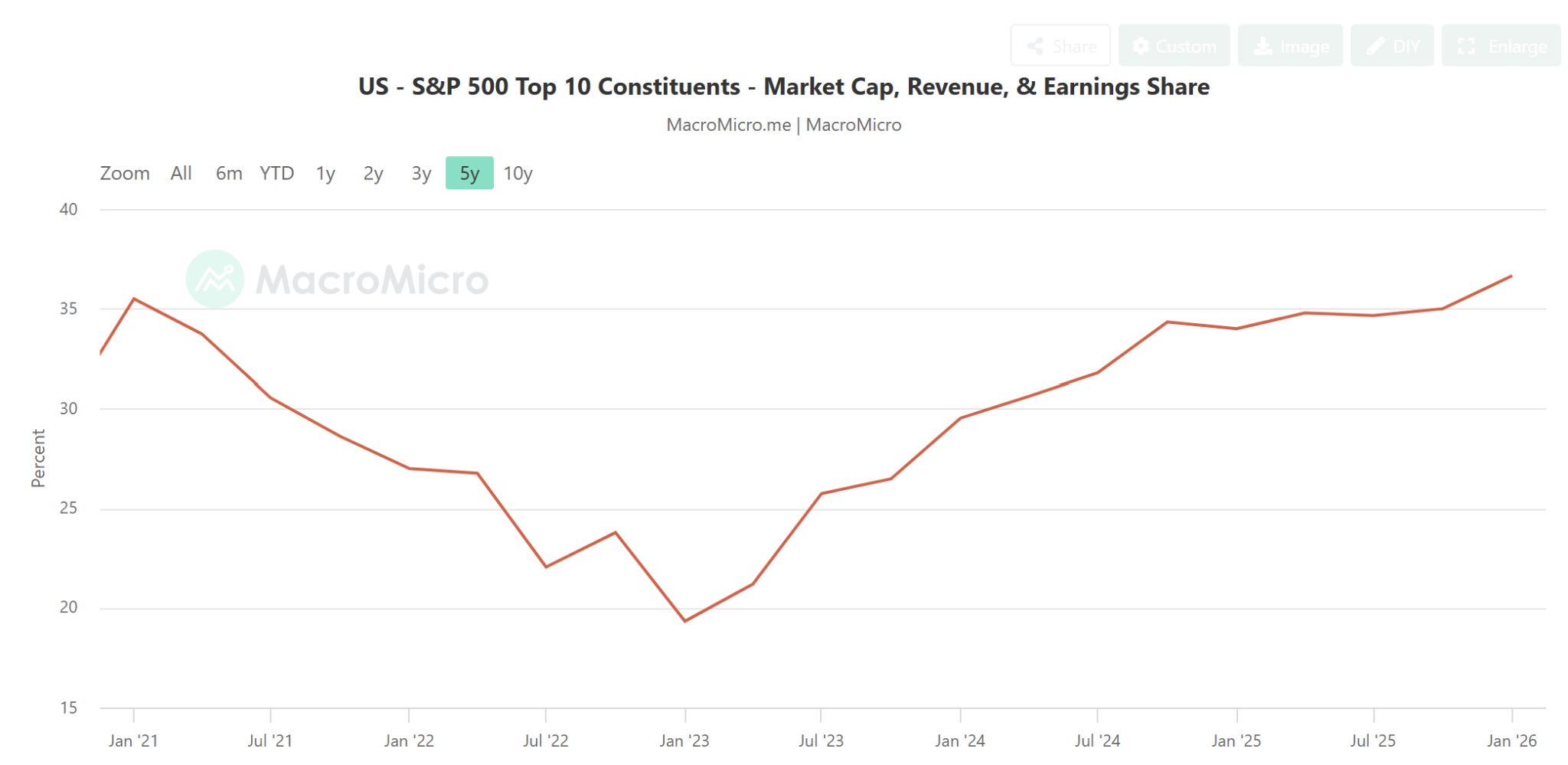
So we have a shller P/E that looks high, and a trailing P/E that is lower than in 2000.
It all comes back to margin.
The net margin has increased for the entire S&P 500 over the years. If it stays high, then the Shiller P/E overstates the risk.
But the more worrisome is the margin debt, which is now the second-highest since 1997.
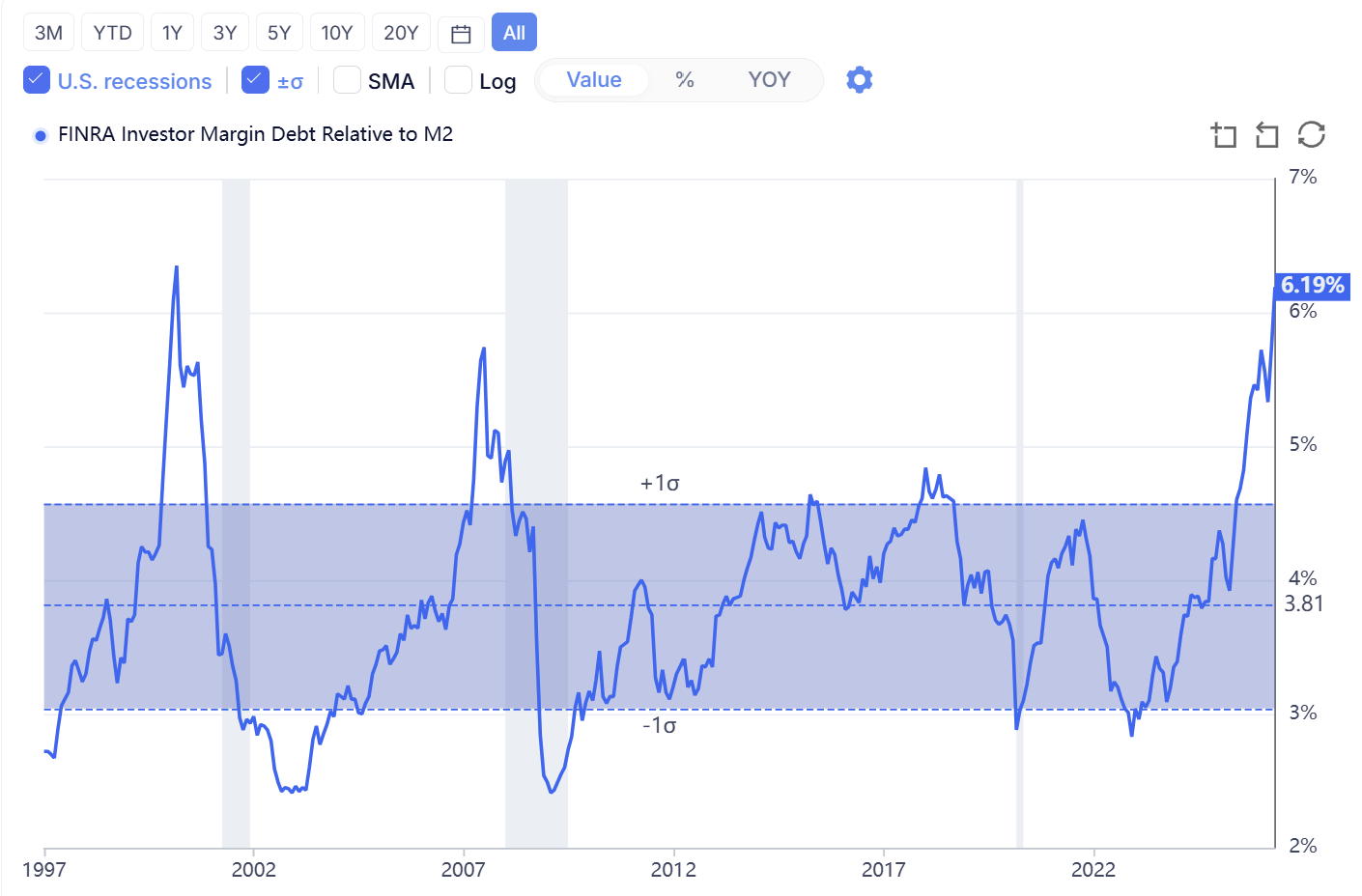
What this means is that investors have borrowed near-record amounts against the stocks they already own in order to buy even more stock, and that pile of borrowed money is the fuel that turns an ordinary market dip into a crash.
So we cannot use it to predict WHEN a crash will happen. The only thing we can say is that if something triggers it, the more margin debt in the system, the more fuel it adds to the crash (downwards).
So what do we do?
We don’t really change our strategy. Hunt for treasures in the microcap space. The only thing we might lean towards is placing more weight on current free cash flows and assessing whether the company’s business model is AI-resilient in the near future.
(You can check what we did with 100 software companies here.)
Remember the master:
More money is lost waiting for corrections than in them
-Peter Lynch
2. Stu(o)ck in the funnel: RADCOM (RDCM)
Description: RADCOM (Ticker: RDCM) is an Israeli telecom software company. It sells service assurance and network observability software to telecom operators, basically the tooling that lets a carrier see what’s happening inside its network in real time. The flagship is RADCOM ACE, an AI-driven analytics platform, and in February, it launched Neura, an AI agent suite for autonomous networks. In 2025, it generated a record $71.5M in revenue, was profitable with a net margin of roughly 17%, and had $108M in cash and no debt. Customers are Tier-1 operators (historically Rakuten Symphony, 1GLOBAL, and AT&T).
Type: Microcap Software company that looks cheap
Why it’s interesting: Profitable company with activists trying to unlock the value from the balance sheet.
The rundown: This isn’t a turnaround, and it is not a sinking ship. It’s a quiet compounder the market has lost interest in. It grows double digits, runs 20% margins, and generates cash. The headline trailing P/E is 17, which looks unremarkable. But half the market cap is cash. Market cap is $210M, cash is $108M, and there is no debt, so the enterprise value is only $103M. Strip the cash, and you’re paying roughly 8x earnings for a business growing 10%. PEG sits at 0.7. For a profitable telecom-software grower, that’s cheap.
Quick financials:
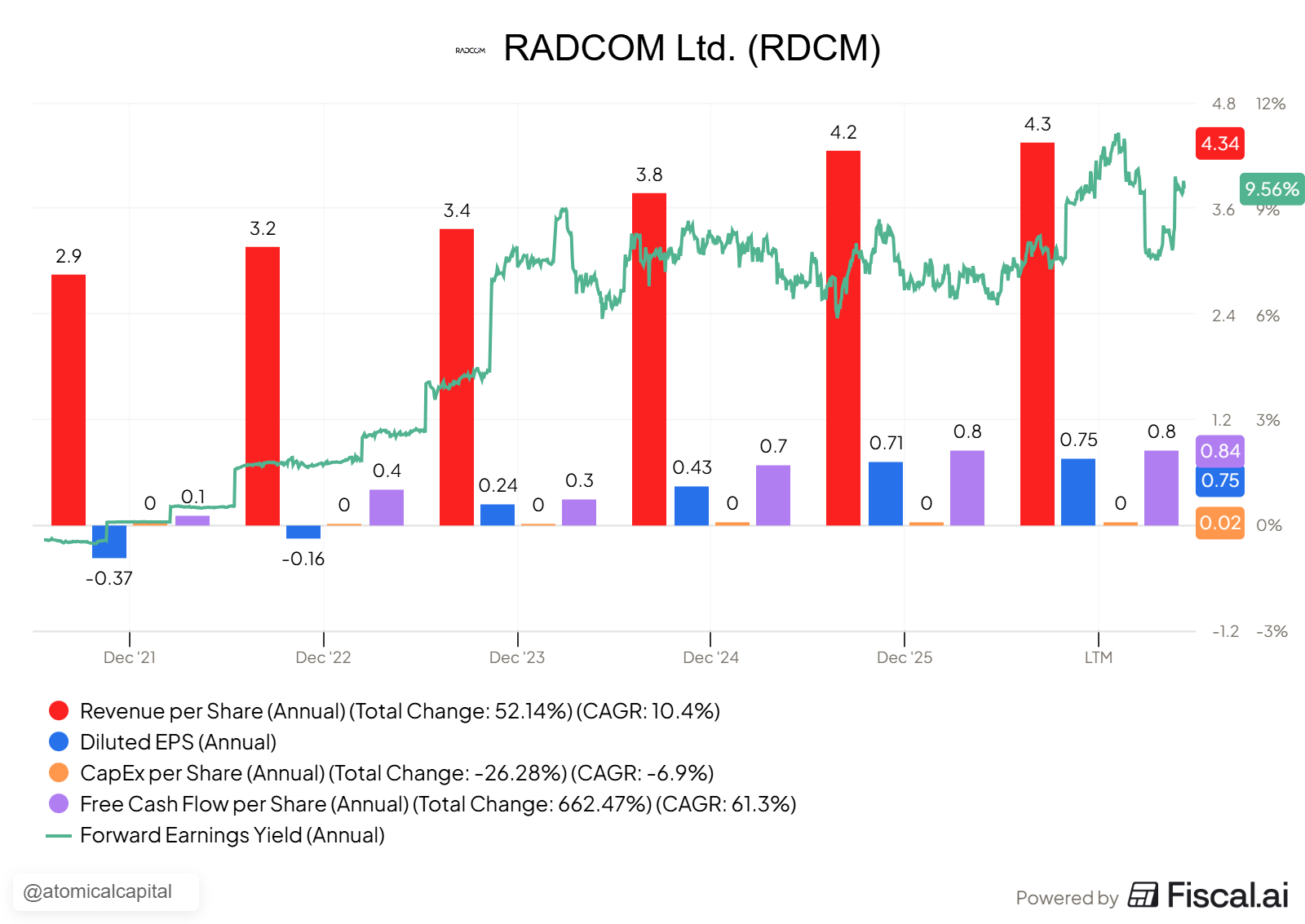
Per share chart from fiscal.ai
Per share revenue and earnings growth, with a high forward earnings yield and a lot of cash on the balance sheet.
Not a 100-bagger, but you might make some money from it.
Current Status: Still doing my due diligence, might turn into a full analysis in the coming weeks.
3. Best article of the week
Sparkline publishes some great research. And a month ago, they published a piece on AI disruption.
It’s not just about software disruption; Sparkline goes deep into the history of disruption in general.
And based on their research, we have reached a new peak, with 72% of US companies now actively exposed to disruption:
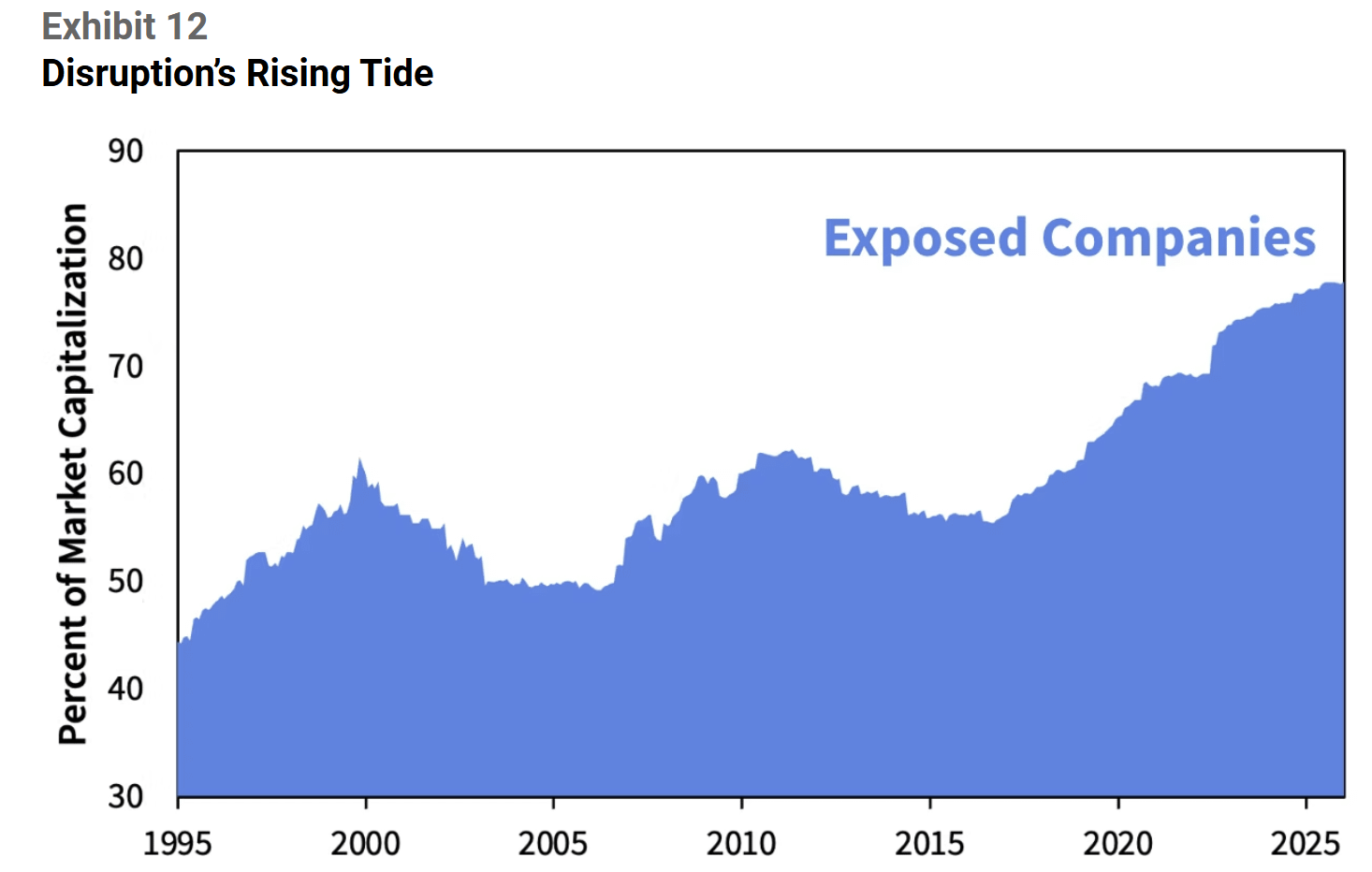
They looked into the past and wondered, why did a company like Walmart survive disruption from e-commerce?
The answer is their intangible moat.
Sparkline defines the intangible value factor as including intellectual property, brand, human capital, and network effects.
And this can be applied to software specifically:
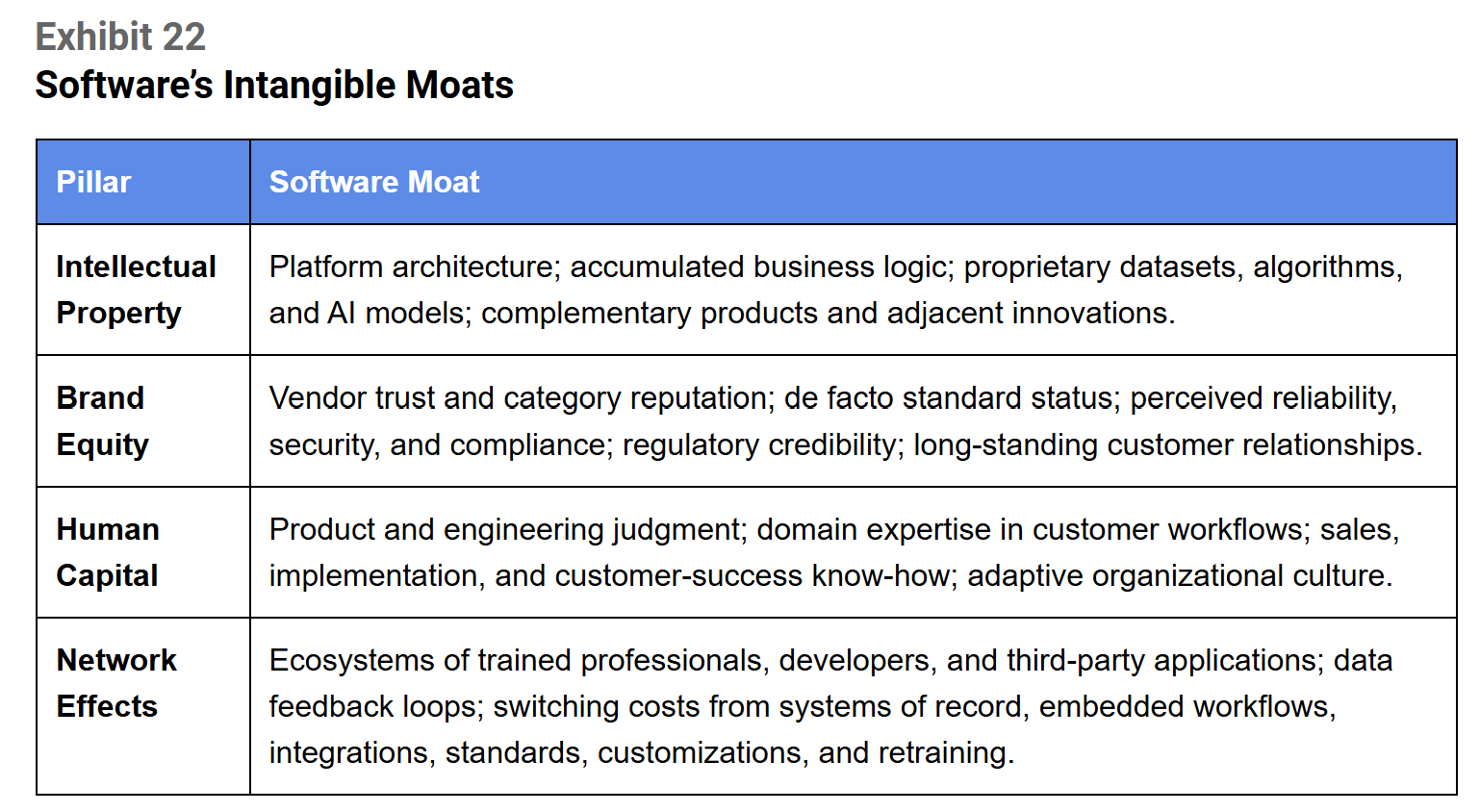
These moats are widest in enterprise software, where products often serve as mission-critical systems of record, integrate deeply into customer workflows, and face onerous security and compliance requirements. Even before AI coding, customers had the option to build software in-house or switch to cheaper startups with more modern infrastructure – yet most did not. Rather than reinvent the wheel, they chose to outsource to trusted partners.
They then placed software stocks that had been beaten down by more than 30% this year into a quadrant.
The top-right quadrant means: Early AI adopters with a strong intangible moat.
If you look at the number of bubbles, most of the companies are on the bottom-left side.
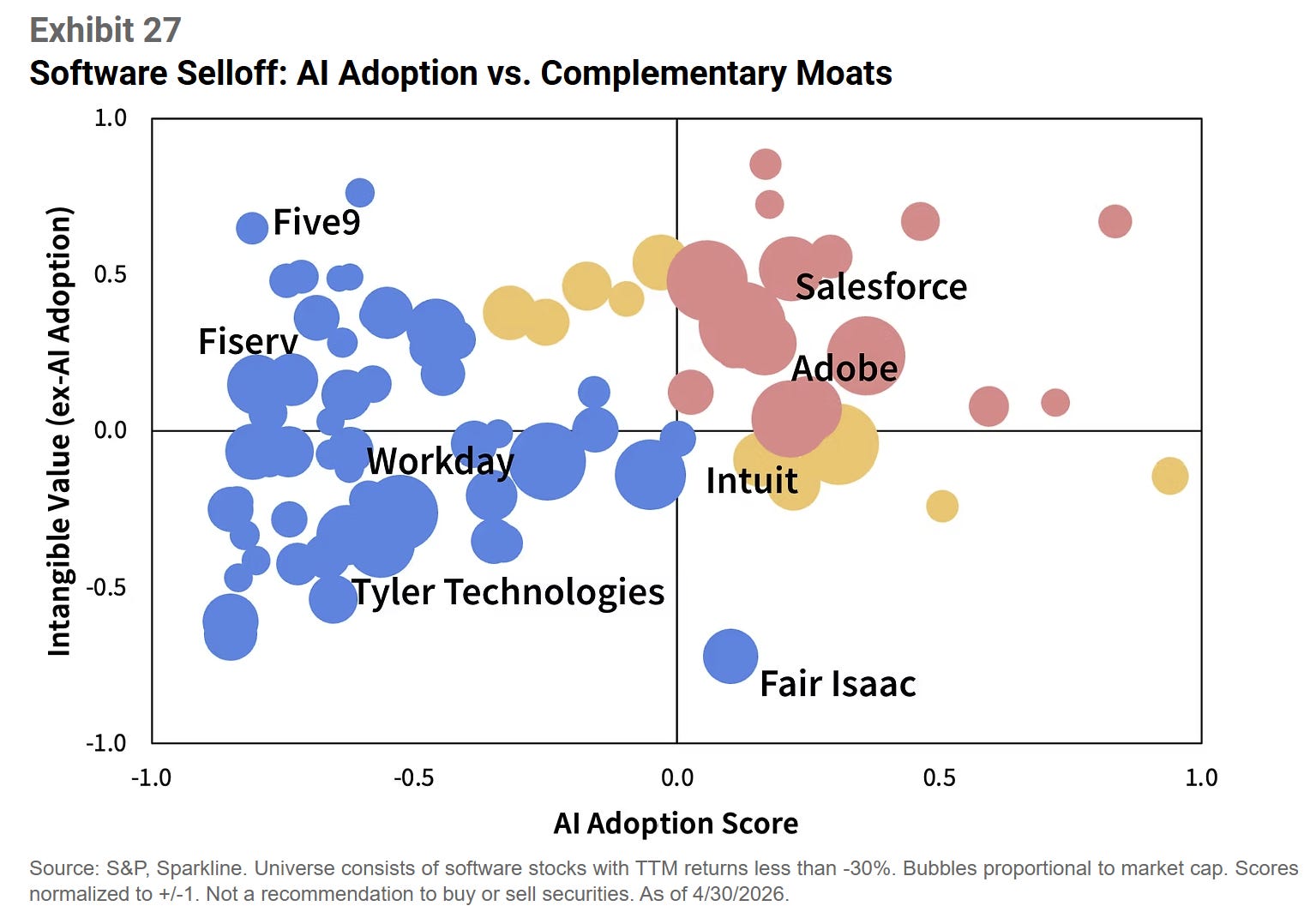
Bottom line: Applying this intangible value factor reveals a small selection of software stocks that might outperform over the next few years thanks to their moats and early adoption of AI.
I recommend reading the full article here.
Next week, we’ll look at a full analysis for Microcap Las Vegas.
Over 100 companies presented, so let’s see if we can find the best ones.
May the markets be with you, always!
Kevin